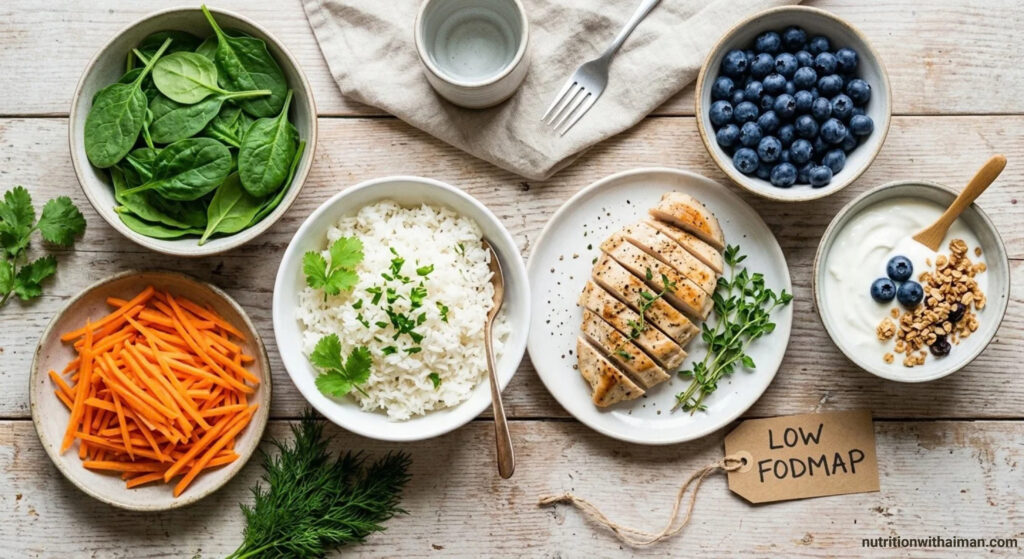
Before I understood FODMAPs, I spent years assuming “healthy” foods like garlic, onion, and apples were fine for my gut, they weren’t, and figuring that out changed how I eat completely. As a certified nutritionist, the low FODMAP food list is the single most requested resource from clients dealing with IBS, SIBO, or general digestive distress.
If you’re new to the low FODMAP food list, the sheer number of “avoid” foods can feel overwhelming at first, especially because several of them (garlic, onion, apples, and wheat) are staples in most people’s regular cooking. This guide breaks down exactly what’s approved, what to avoid, and why, so you can start eating with confidence instead of second-guessing every ingredient.
For low FODMAP recipes built entirely around this list, visit → [Low FODMAP Chicken Noodle Soup] to see it in action.
What Does Low FODMAP Actually Mean?
FODMAP stands for Fermentable Oligosaccharides, Disaccharides, Monosaccharides, And Polyols, a group of short-chain carbohydrates that are poorly absorbed in the small intestine. When they reach the large intestine undigested, gut bacteria ferment them, which can cause bloating, gas, cramping, and altered bowel habits in people with sensitive digestive systems, particularly those with IBS (Irritable Bowel Syndrome) or SIBO (Small Intestinal Bacterial Overgrowth).
The low FODMAP diet was developed by researchers at Monash University in Australia and is widely considered the gold-standard dietary approach for managing IBS symptoms.
Important note: the low FODMAP diet is typically done in three phases — elimination, reintroduction, and personalisation, and is best done with guidance from a dietitian or your doctor, especially the reintroduction phase. This list covers the elimination phase: what’s broadly safe to eat while you identify your personal triggers.
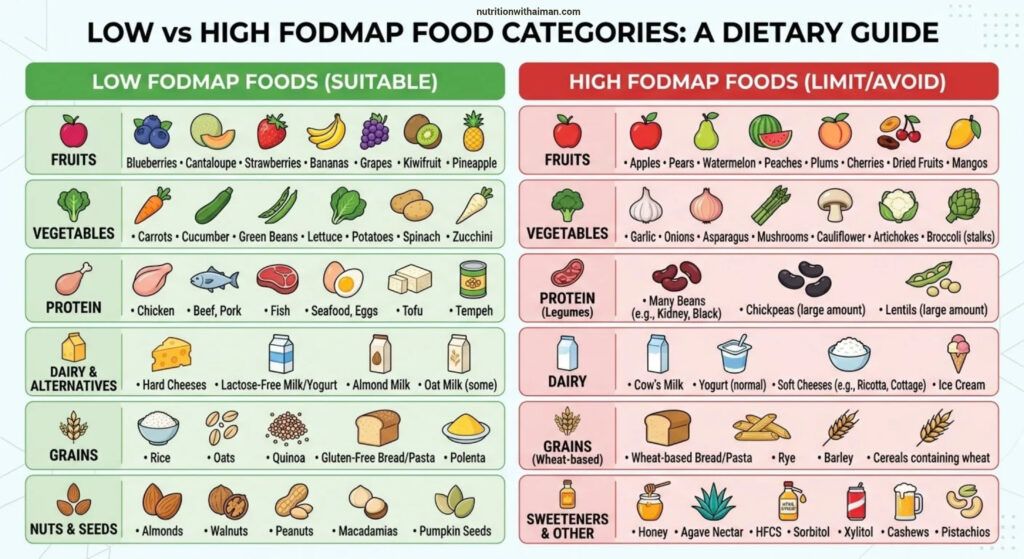
Low FODMAP Foods You Can Eat
✅ Vegetables
Carrots, cucumber, zucchini/courgette, eggplant/aubergine, bell peppers, spinach, kale, bok choy, green beans, tomatoes, potatoes, sweet potatoes (in moderate portions), lettuce, cabbage (in small portions), bean sprouts, chives (green part only), the green tops of spring onions
✅ Fruits
Bananas (firm, not overripe), blueberries, strawberries, raspberries, grapes, oranges, mandarins, kiwi, pineapple, cantaloupe, honeydew melon, lemons, limes
✅ Proteins
All plain meat, poultry, and fish (chicken, beef, turkey, salmon, shrimp), eggs, firm tofu, tempeh, and plain canned tuna, as long as nothing is marinated in high FODMAP sauces, garlic, or onion
✅ Grains
Rice (white and brown), oats, quinoa, gluten-free bread and pasta, corn tortillas, polenta, rice noodles
✅ Dairy and Alternatives
Lactose-free milk, hard cheeses (cheddar, parmesan, and brie in small amounts), butter, unsweetened almond milk, and unsweetened coconut milk (small portions)
✅ Nuts and Seeds
Almonds (max 10), walnuts, macadamia nuts, peanuts, pumpkin seeds, sesame seeds, chia seeds
✅ Fats and Oils
Olive oil, coconut oil, and garlic-infused oil (the FODMAPs in garlic aren’t oil-soluble, so infused oil carries the flavour without the trigger)
✅ Herbs and Seasonings
Basil, ginger, oregano, parsley, thyme, rosemary, mint, chives, salt, pepper, and most dried spices without garlic or onion powder added
High FODMAP Foods to Avoid
❌ Vegetables
Garlic, onion (including powder), leeks, cauliflower, mushrooms, asparagus, artichokes, sugar snap peas, celery (large amounts)
❌ Fruits
Apples, pears, mangoes, watermelon, cherries, peaches, plums, dried fruit, and most fruit juices (concentrated FODMAPs)
❌ Grains
Wheat and wheat-based products (bread, pasta, cereal), rye, barley
❌ Dairy
Regular milk, soft cheeses (ricotta, cottage cheese), ice cream, yoghurt (unless lactose-free), cream
❌ Legumes
Chickpeas, lentils, kidney beans, black beans, and baked beans (all high in oligosaccharides — small rinsed-canned portions are sometimes tolerated, but whole servings typically aren’t)
❌ Nuts
Cashews and pistachios (both high in FODMAPs, unlike most other nuts)
❌ Sweeteners
Honey, high fructose corn syrup, agave, and sugar alcohols (sorbitol, mannitol, xylitol — common in sugar-free gum and “diet” products)
Why Are Garlic and Onion Off Limits?
This is the question that surprises almost everyone new to this list. Garlic and onion contain fructans, a type of oligosaccharide that’s one of the most common IBS triggers. Since garlic and onion appear in an enormous share of everyday cooking — sauces, soups, seasoning blends, restaurant food, this is often the hardest single adjustment on the entire diet.
The good news: garlic-infused oil solves most of this. The FODMAPs in garlic are water-soluble, not oil-soluble, so when garlic is infused into oil and then removed, you get the flavour without the trigger. This one substitution makes a huge difference in how “normal” low FODMAP cooking can taste.
Serving Size Matters — FODMAPs Are Dose-Dependent
One of the most misunderstood parts of this diet: many foods aren’t universally “high” or “low” FODMAP — it depends on portion size. A small serving of food might be perfectly fine, while a larger serving pushes it into high-FODMAP territory.
Examples:
- Sweet potato: low FODMAP in small portions (about ½ cup), higher FODMAP in large portions
- Cabbage: low FODMAP in small amounts, higher FODMAP in large amounts
- Almonds: low FODMAP up to about 10 nuts, higher FODMAP beyond that
This is exactly why the official Monash University FODMAP app (widely considered the most reliable source) lists specific gram or cup measurements rather than just “yes” or “no”, worth downloading if you’re serious about this diet long-term.
How to Start the Low FODMAP Diet
Phase 1 — Elimination (2-6 weeks): Remove all high FODMAP foods and eat only from the approved list. This is where most people notice significant symptom improvement, often within the first two weeks.
Phase 2 — Reintroduction (6-8 weeks): Slowly reintroduce one FODMAP group at a time in controlled amounts to identify your specific triggers. This phase is best done with a dietitian, since it requires careful tracking.
Phase 3 — Personalization: Build a long-term diet based on what you’ve learned, avoiding only your personal triggers rather than staying on the strict elimination list indefinitely.
Common Mistakes People Make on the Low FODMAP Diet
Staying in the elimination phase too long. The elimination phase isn’t meant to be permanent, it’s a diagnostic tool. Staying on it indefinitely can unnecessarily restrict your diet and even affect gut microbiome diversity.
Assuming gluten-free means low FODMAP. These overlap but aren’t the same thing. Some gluten-free products are still high in FODMAP (many contain honey, high-FODMAP fruit purées, or inulin as a fibre additive).
Not checking portion sizes. As covered above, several foods are dose-dependent, treating them as universally “safe” in any amount is a common error.
Avoiding all legumes entirely and missing fibre. Some canned, rinsed legumes are tolerated in small portions (canned chickpeas rinsed well, for example, are lower in FODMAPs than dried). Cutting all legumes without checking specifics can mean missing out on fibre unnecessarily.
FAQs About the Low FODMAP Diet
Is the low FODMAP diet the same as gluten-free?
No. They overlap in some areas (wheat is both high in FODMAP and contains gluten), but many gluten-free foods are still high in FODMAP, and many high-gluten foods have low-FODMAP alternatives that aren’t gluten-free.
How long should I stay on the low FODMAP diet?
The elimination phase typically lasts 2-6 weeks, followed by reintroduction. Staying in strict elimination long-term isn’t generally recommended without professional guidance.
Can I follow a low FODMAP diet as a vegetarian or vegan?
Yes, though it takes more planning since many plant proteins (legumes) are high FODMAP. Firm tofu, tempeh, quinoa, and small portions of specific nuts and seeds become your main protein sources.
Is low FODMAP the same as low fibre?
No, it’s easy to accidentally reduce fibre intake on this diet since many high-fibre foods (legumes, certain fruits) are also high in FODMAP. Focus on low FODMAP, high-fibre options like oats, chia seeds, and low FODMAP vegetables to avoid this.
Do I need a doctor’s involvement to try low FODMAP?
It’s strongly recommended, especially for the reintroduction phase. A doctor can also rule out other conditions causing similar symptoms before you start restricting your diet.
Final Thoughts
The low FODMAP diet can feel restrictive at first, especially with staples like garlic, onion, wheat, and apples on the “avoid” list. But once you get familiar with the approved list and a few key swaps (garlic-infused oil being the biggest one), it becomes much more manageable and, for many people with IBS or SIBO, genuinely life-changing.
Keep this list on hand for your first few weeks, and remember: elimination is temporary, not forever. The goal is finding your personal triggers, not permanent restriction.
For a complete low FODMAP recipe using many of these approved ingredients, visit → [Low FODMAP Chicken Noodle Soup]
Very Informative
Keep it up
Thank you so much!
Your research is full of information that easily clear my concepts.
Really helpful read! Loved how simply you explained IBS and FODMAPs easy to understand and actually practical. 👏
Thanks dear
Pingback: Low FODMAP Chicken Noodle Soup (Easy & Gut-Friendly)
Really liked the content
Pingback: Low FODMAP Wraps (Easy, Gut-Friendly Lunch Ideas)
Pingback: Low FODMAP Shrimp Recipes (Quick & Gut-Friendly)
Pingback: Low FODMAP Marinara Sauce (Easy, Garlic-Free Recipe)
Pingback: Low FODMAP Dips (5 Easy, Gut-Friendly Recipes)
Pingback: Is Mozzarella Low FODMAP? Clear Answer + Safe Serving Size
Pingback: Is Wine Low FODMAP? (What's Safe to Drink)
Pingback: Is Spaghetti Squash Low FODMAP? (Answer + Recipe Ideas)
Pingback: Are Pumpkin Seeds Low FODMAP? (Portion Size Guide)
Pingback: Low FODMAP Pasta Salad (Easy, Make-Ahead Recipe)
Pingback: Is Tofu Low FODMAP?